
Glass is highly valued in the beverage industry: its high-quality feel, visual appeal, and stable structure make the material particularly attractive for premium products. At the same time, handling delicate glass containers requires the utmost care. Robot-assisted packaging systems help to overcome these challenges, as they can flexibly combine different tasks, even when space is limited.
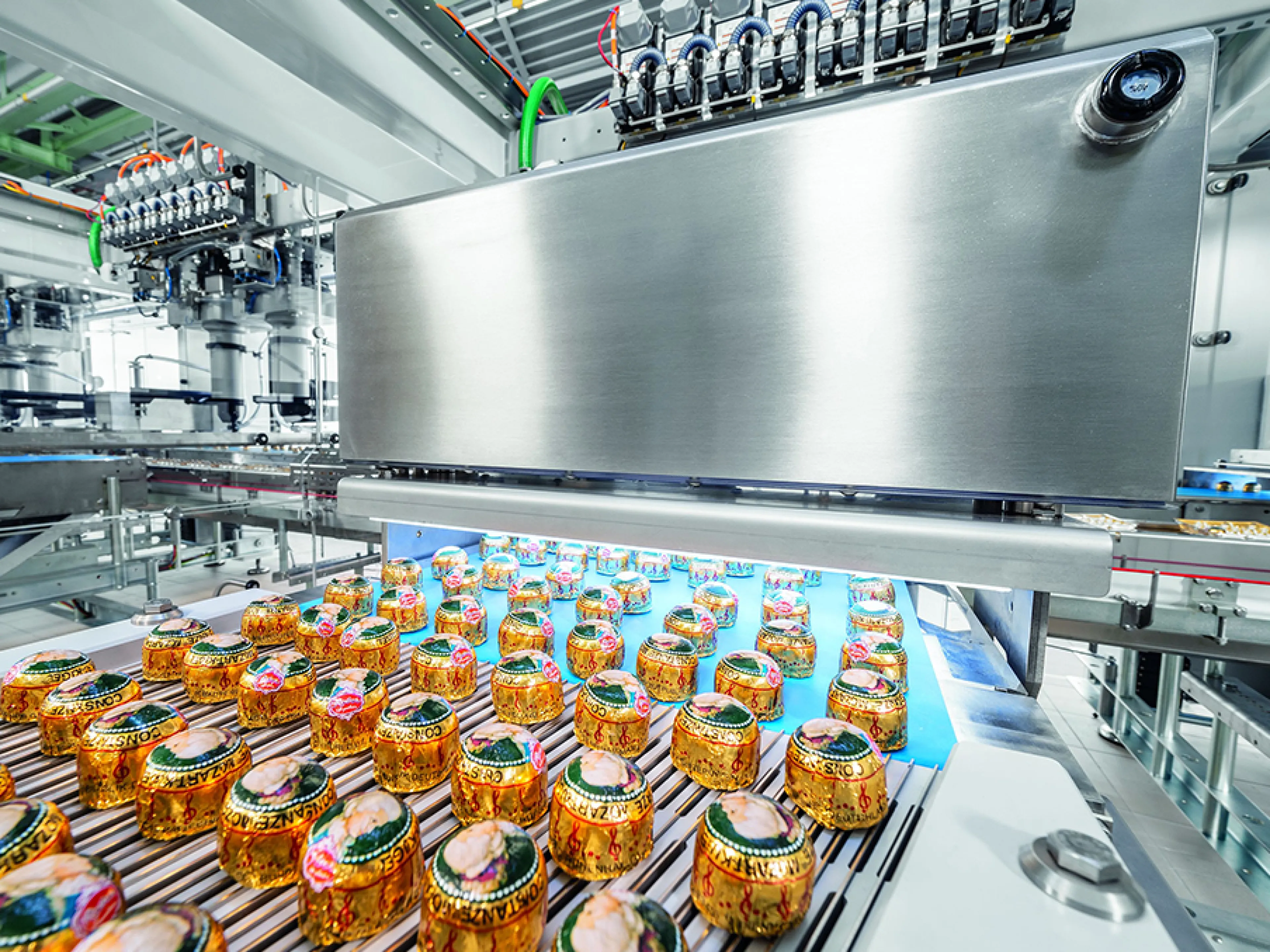
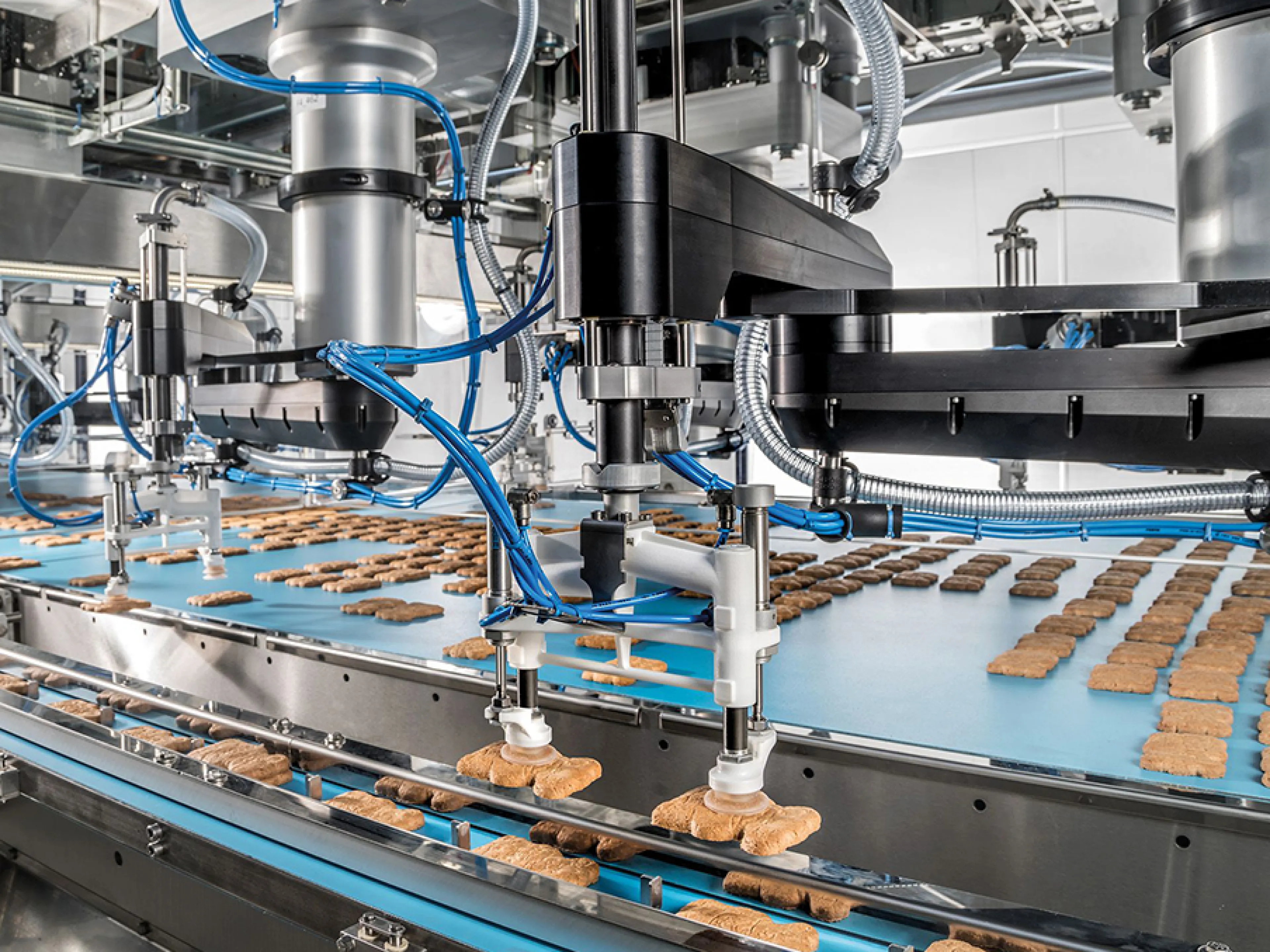
High-quality beverages such as champagne or spirits are often presented in specially designed bottles and decorated secondary packaging. To ensure that the delicate labels and sensitive glass surfaces do not get scratched or dented, all process steps must be precisely coordinated. For production, this means filling, sealing, labeling, aligning, and placing items exactly without risking damage. Robots take on central tasks here. Scara robot systems such as Schubert's F4 series pick up bottles individually, tilt them in a controlled manner, and place them precisely in prepared carton inserts. Handling is usually contact-free using suction tools. These are designed so that labels and glass are not touched. Additive manufacturing methods such as selective laser melting enable the grippers to be adapted to different bottle contours.
Robot-assisted packaging systems for changing product ranges
Many beverage manufacturers today are launching variants, limited editions, or special sizes. Environmentally friendly materials, lightweight glass, or cardboard alternatives are also gaining in importance. Accordingly, systems must be able to switch quickly between different formats, packing schemes, and materials. Robot-assisted packaging systems support such hybrid product ranges, for example, in the case of mixed packs or cardboard packaging that replaces shrink wrap. Co-packers benefit particularly, as they work on behalf of different brands. Modular machines such as Schubert's TLM systems allow gripping tools, feeders, or packaging cycles to be adapted as required. Vision systems automatically recognize the right products for assembly, which is crucial for mixed bottle packs, for example.
Transport and handling in flexible line layouts
In modern lines, robotics does more than just pick-and-place tasks. Transport robots such as the Transmodul act as a central link between different process steps. Packaging components are fixed, moved, and sequenced on individual modules, from erecting the blanks to closing the cartons. The parallel mode of operation ensures high performance even with changing formats.
The compact design of many systems also facilitates integration into existing production environments. Inductive power supply and wireless communication of the transport modules reduce space requirements, as additional conveyor technology is not required.
Efficient production in a limited space
Since many companies have only limited floor space available, compact, highly flexible solutions are in demand. Single-lane erection units, integrated control technology, and adaptive transport modules make it possible to map complete packaging lines in a small area. This allows sophisticated premium products to be packaged reliably without having to install large systems.
Conclusion: Robot-assisted packaging systems create flexibility and process reliability
With precise handling, fast format changes, and scalable modules, modern robot solutions offer the necessary flexibility for an industry that is constantly producing new variants and packaging concepts. For manufacturers of premium beverages, this results in stable, adaptable processes that ensure quality while remaining economical.
Author
Markus Vogelmann
Sales Account Manager at Gerhard Schubert