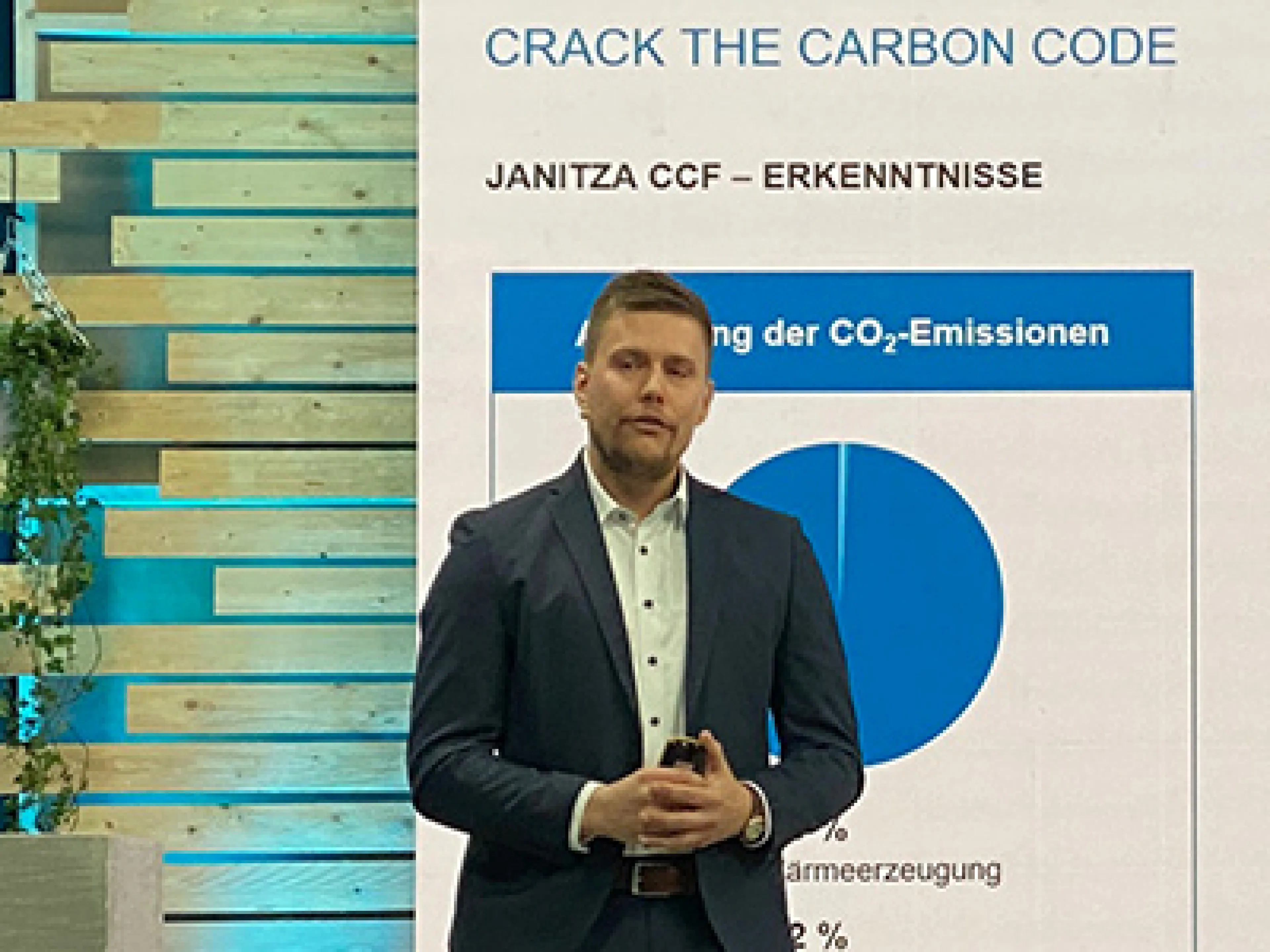

The All Electric Society (AES) is more than just a strategic vision. It requires concrete technical solutions. In the first part of our highlight talk with Klaus Pflüger from Wöhner, Jörg Scheer from Harting, and Joel Stratemann from Phoenix Contact, we discussed strategic objectives and political framework conditions. Now the focus is on technical implementation. Using practical examples, the three discussion partners show how storage technologies, direct current grids, data economy, and intelligent system integration contribute to the realization of the All Electric Society.
Storage technologies as the basis for security of supply
Electrical energy from renewable sources is not continuously available. This is why storage plays a central role. “Storage is a key technology for us,” says Jörg Scheer. “Without it, there will be no energy transition.” He refers to various concepts such as battery storage or hydrogen as a transport medium. Joel Stratemann emphasizes: “What you can't control is generation using wind and sun. But you can control consumption. This requires data and the appropriate storage size.” Klaus Pflüger emphasizes that control plays an important role not only in industry but also on the consumer side: “Only if I consume as much energy as possible when I have generated it can I achieve maximum efficiency.”
Direct current grids as a lever for efficiency
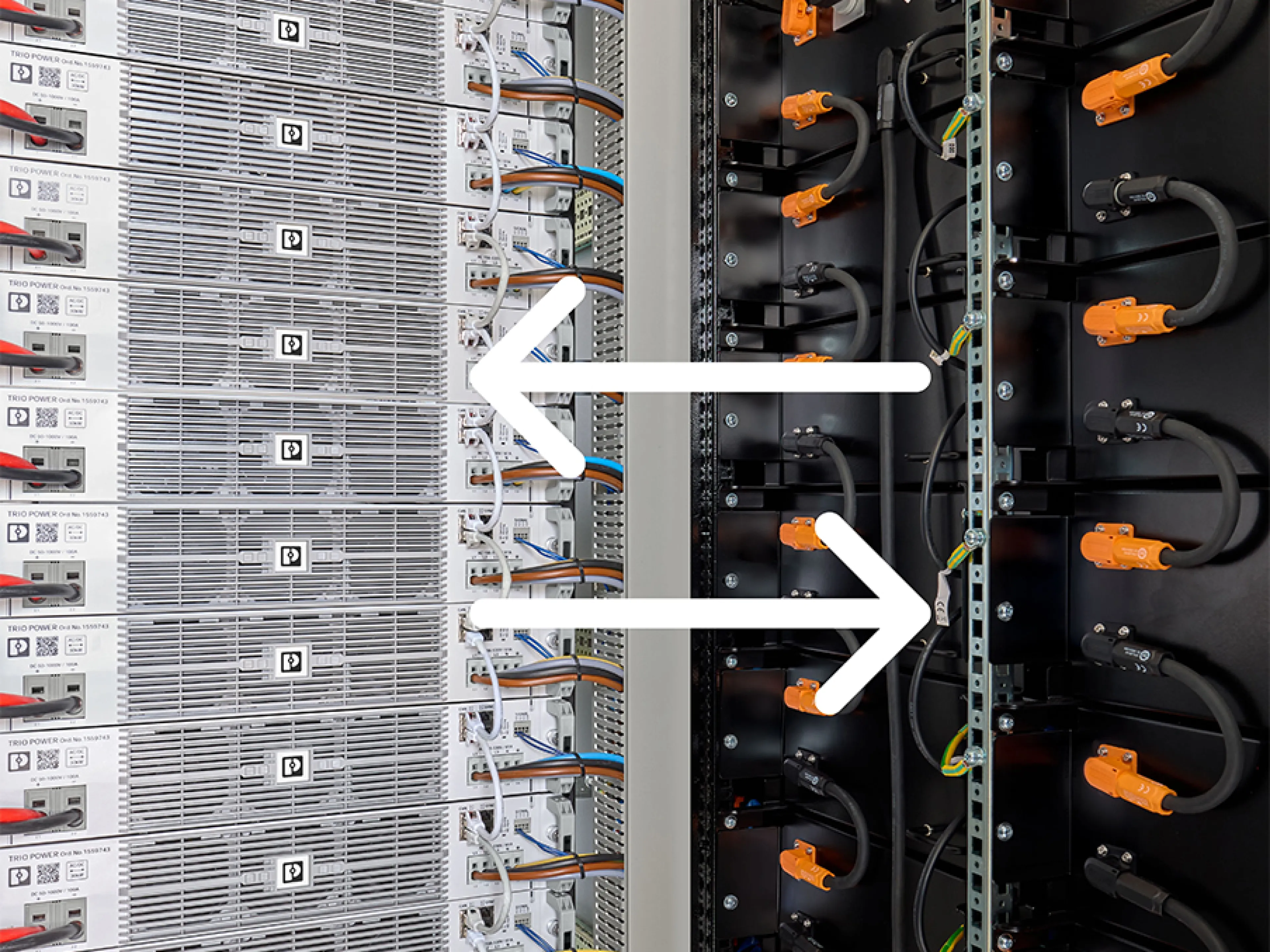
A central topic of the discussion is the avoidance of conversion losses in classic alternating current systems. “In a direct current grid, we bring producers, consumers, and storage facilities together directly on one level,” explains Stratemann. This has already been implemented in the so-called “All Electric Society Factory” at Phoenix Contact in Blomberg: Photovoltaic systems, storage facilities, and charging infrastructure work together on a direct current basis. “This allows us to avoid conversion losses and save resources,” Stratemann continues. Energy losses occur between direct current and alternating current systems during each conversion, and these losses add up when multiple conversions take place. A continuous DC grid can significantly reduce these losses, which both increases energy efficiency and protects technical components. Klaus Pflüger also sees great advantages in DC systems. His company develops technology that can be adapted to new requirements even after installation, for example, through retrofitted measurement technology or software upgrades. “Compact, retrofittable components enable entry into direct current technology, especially in existing buildings,” says Pflüger.

All Electric Society: automation, data, and intelligent control
For sector coupling to work, data must be exchanged efficiently between generation, storage, and consumption. “Without automation, there will be no All Electric Society,” Jörg Scheer is certain. “And the next step up from that is the use of artificial intelligence.”
In this context, Stratemann talks about the data economy: “We have to link energy demand and availability in real time. Forecasts, optimization, and control are crucial for this.” Klaus Pflüger agrees, emphasizing the role of measurement technology: “Without the collection of consumption data, there is no sound basis for efficient energy systems.”
Practical examples for the All Electric Society: From the factory to the charging infrastructure
In Phoenix Contact's “All Electric Society Factory,” a continuous direct current system with storage, generation, and utilization has been implemented. A 2.4-megawatt photovoltaic system, ice storage, battery storage, and bidirectional charging form an energy-networked overall system. “We are demonstrating that the technology is available and that the system works,” says Stratemann. “It often fails only because of a lack of proper planning and the current lack of regulations, specifically in the use of electric vehicles as storage devices.”
Scheer sees electrified mobility and mechanical engineering as major growth markets: "Everything that needs to be powered by energy is relevant to us. Pluggable connections, sensor technology, and standardization are key issues here.“ Klaus Pflüger sees particular potential in the retrofit sector from Wöhner's perspective: ”Modern components can help make existing systems fit for the future, especially in existing plants with long operating times."

Cooperation and standardization as success factors
Common standards are needed to make technologies interoperable and scalable. “Partnerships simplify development and create synergies that prevent communication problems from arising in the first place. Regular exchanges in committees, research projects, or initiatives such as the ODCA help to ensure that solutions actually work together in practice,” emphasizes Klaus Pflüger. Jörg Scheer adds: “German industry should seize this opportunity and set standards with a common language.” Stratemann points to the role of system integrators: “We supply technologies, but networks are needed to combine and implement them in a meaningful way.” He emphasizes that manufacturers alone cannot achieve implementation: “We are all part of the All Electric Society, but we need planners, consultants, and system integrators to bring the individual building blocks together and transform them into functioning overall systems.”
Conclusion: From vision to implementation of the All Electric Society
The technological prerequisites for the All Electric Society are in place. The transformation of energy systems, production facilities, and infrastructure is underway. However, binding regulatory frameworks, planning security, and coordinated cooperation between industry, planning, and politics are now crucial for success. Klaus Pflüger considers a certain degree of continuity to be particularly important in this regard: “After years of upheaval, developments must now be continued consistently and reliably so that companies have planning security.” Only in this way can the vision of the All Electric Society ultimately become a viable reality.