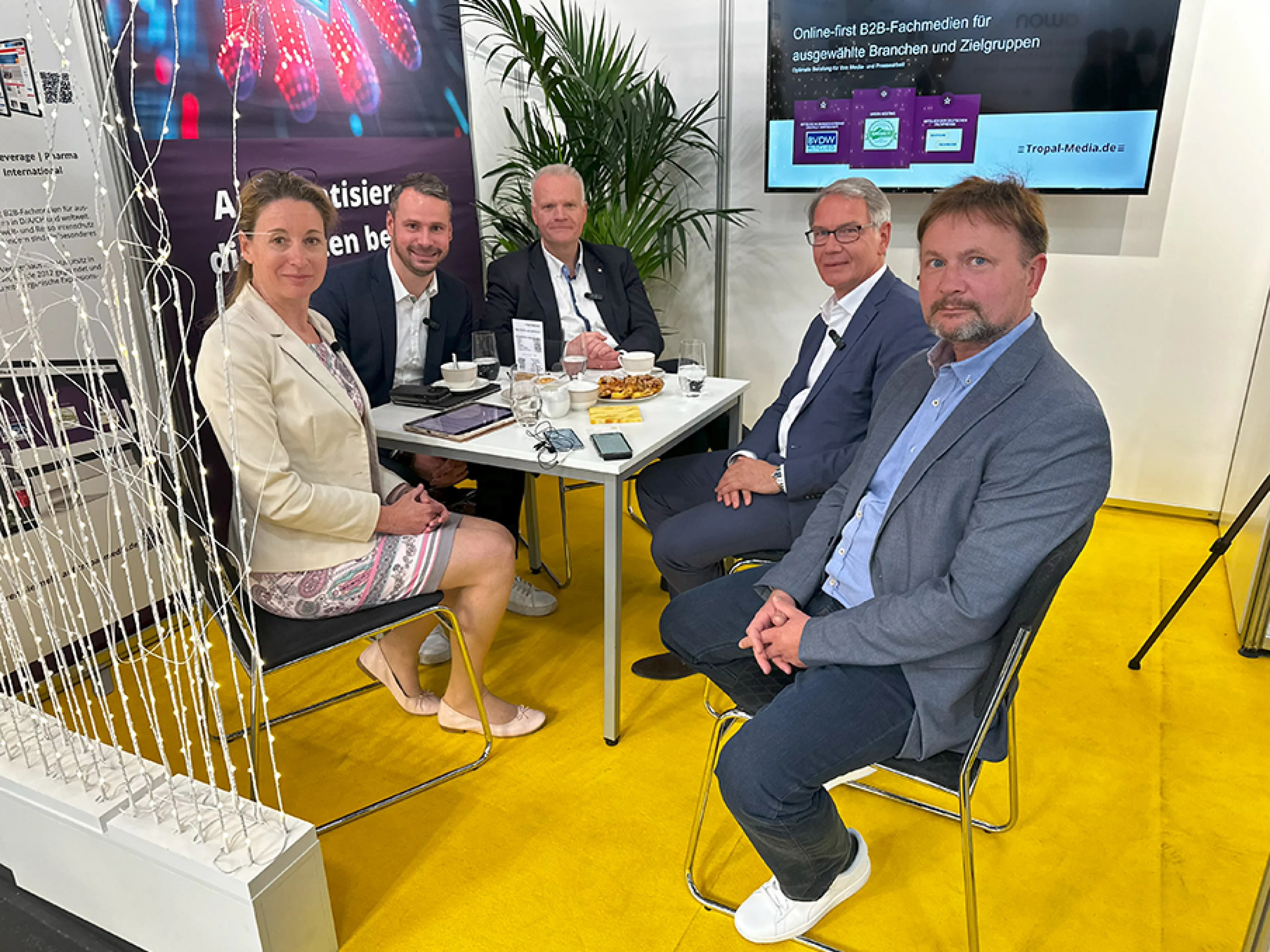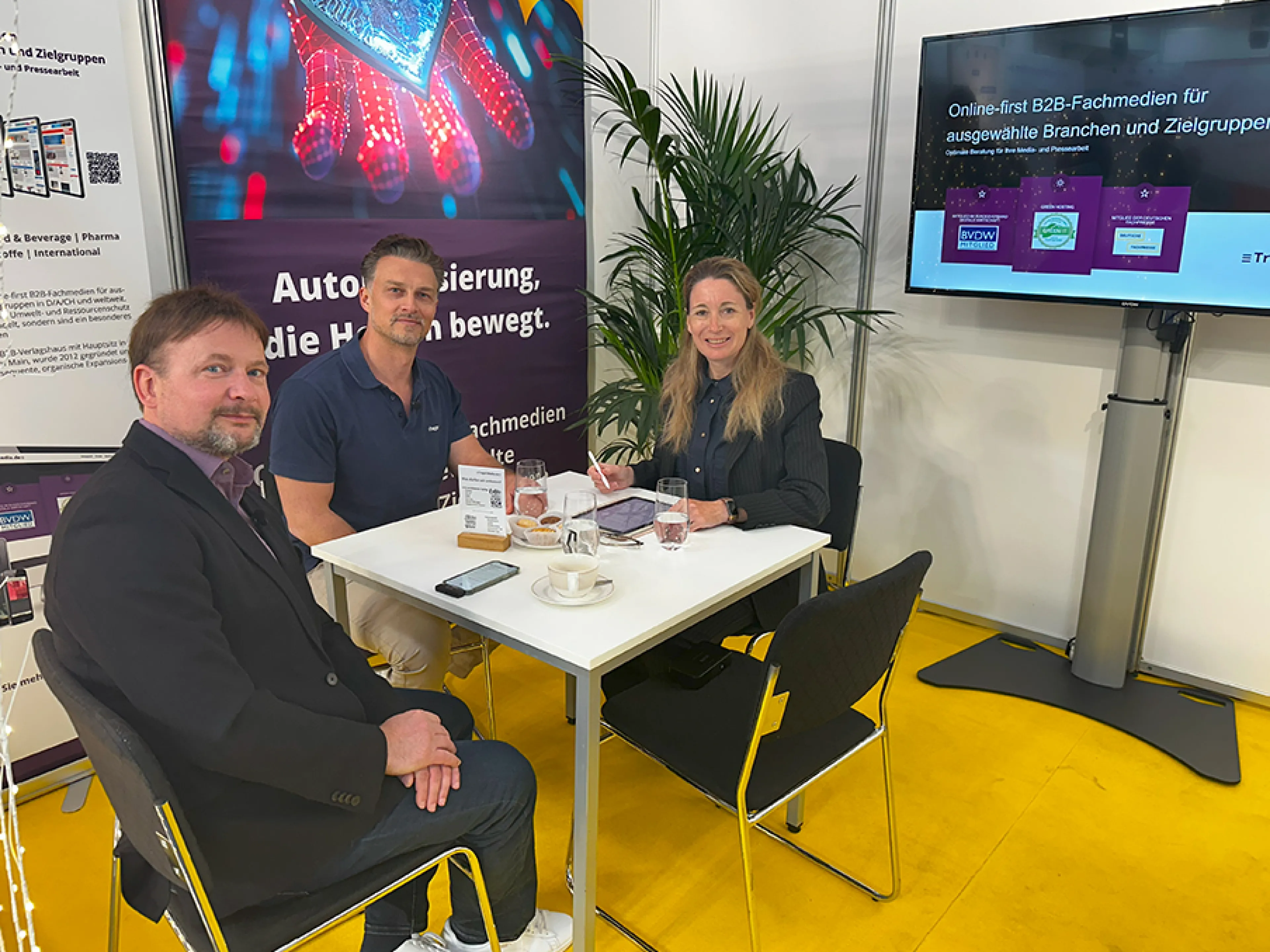

The vision of the All Electric Society (AES) stands for a comprehensively electrified, digitally networked, and sustainable energy supply. At Europe's largest trade fair alliance for the energy industry, “The smarter E Europe 2025,” Joel Stratemann, Integrated Energy Solutions Vertical Market Management at Phoenix Contact, Jörg Scheer, Managing Director of Harting Customized Solutions and Harting Electronics, and Klaus Pflüger, Director of Key Account Management at Wöhner, discussed with Susanne Woggon, Editor-in-Chief at Tropal Media, how their companies are implementing the AES concept in concrete terms and what steps still need to be taken to achieve this. Their assessments show that the All Electric Society is now much more than just a concept. It is influencing decisions at all levels of industrial development.
All Electric Society tackles the climate crisis
According to the discussion partners, the AES encompasses several dimensions: the switch to renewable energies, their use in electrified applications, and intelligent cross-sector networking. It serves as a response to the climate crisis. This is because the electrification of all relevant sectors and the abandonment of fossil fuels can significantly reduce CO2 emissions. Companies and other players in the energy and automation industries are actively promoting the concept. It serves as a model for technological developments, political strategies, and scientific research in the field of sustainable energy systems. “Everything related to industry is highly relevant to us as a supplier of connection technology,” says Jörg Scheer. “Buildings, mobility, infrastructure, and production must be considered together and linked in terms of energy,” adds Joel Stratemann.
Towards a fully electrified future: Principles of the All Electric Society
Klaus Pflüger points to the technical feasibility: “We are seeing great progress in the area of energy distribution. Intelligent systems can measure and analyze grid loads, making them controllable. The potential for scaling and efficiency is enormous.”
A fully electrified and cross-sector networked energy future is not just about traditional electricity consumption. The electrification of heating processes also plays a role. The goal is to consistently replace fossil fuels with electricity from renewable sources, such as solar, wind, hydro, or geothermal energy. Four basic principles are at the heart of this:
- Electrification of all consumption sectors such as mobility, buildings, industry, and agriculture
- Complete conversion to renewable energy sources
- Intelligent coupling of these sectors, for example via power-to-gas applications
- Efficiency gains supported by digitalization
Smart grids, storage technologies, and automated systems are intended to enable the optimal use of available energy.
All Electric Society as a corporate orientation framework
“At Phoenix Contact, we see the All Electric Society as a vision that guides all our actions, both in projects and in product development,” emphasizes Joel Stratemann. Jörg Scheer also underscores its strategic importance: “For Harting, the All Electric Society is a technological lever for decarbonization. We see ourselves as an enabler of this development with our connectivity.”
Klaus Pflüger from Wöhner sees this as a fundamental opportunity for the industry: “The All Electric Society is a strong impetus for electrical engineering. It offers us the opportunity to drive innovation in a targeted manner, for example in the areas of photovoltaics, energy distribution, and efficiency improvement.”
Infrastructure, networks, and regulations as bottlenecks
Pflüger demands: “Development must now be consistently driven forward. Continuity and commitment are needed to ensure that investments in technology and infrastructure are effective in the long term.” Despite technological maturity, however, there is often a lack of infrastructure and clear regulatory frameworks. “It's not the technology that's failing, but the implementation,” emphasizes Stratemann. Scheer also calls for: “Companies need planning security. We need a political master plan, clear responsibilities, and proactive communication of the objectives.”
Germany as a conceptual driver of the All Electric Society
The discussion also addresses Germany's role in the international context. “Many concepts, such as sector coupling or the integration of DC grids, originate here,” says Stratemann. Pflüger explains: “German know-how is in demand internationally. Many companies from abroad are establishing development sites in Germany because they find the necessary expertise and quality here.”
Conclusion: There is no alternative to electrification
All participants are convinced that the All Electric Society is not only possible, but necessary. “Fossil fuels are finite, green energy makes us independent and is the most affordable form of energy in the long term,” Scheer affirms. Pflüger emphasizes: "Implementation will not fail because of technology, but because of mindset. Companies and society must see this change as an opportunity.“
According to Stratemann, the key is to ”intelligently integrate existing technologies, remove regulatory hurdles, and get all players along the value chain on board." Only in this way can the vision of the All-Electric Society become a viable reality. The fact that it is already possible today is demonstrated by a large number of projects every day. Whether the vision will quickly become a widespread reality depends largely on political conditions, economic commitment, and social acceptance.
Outlook for Part 2: Technological implementation of the All-Electric Society
The second part of the discussion format will highlight which technological solutions already exist, what role storage, data, direct current grids, and automation play in this, and how companies are implementing specific projects - for example, in direct current distribution, charging infrastructure, or cross-sector integration. The focus will be on the question of how the vision of the All Electric Society can gradually become operational reality.