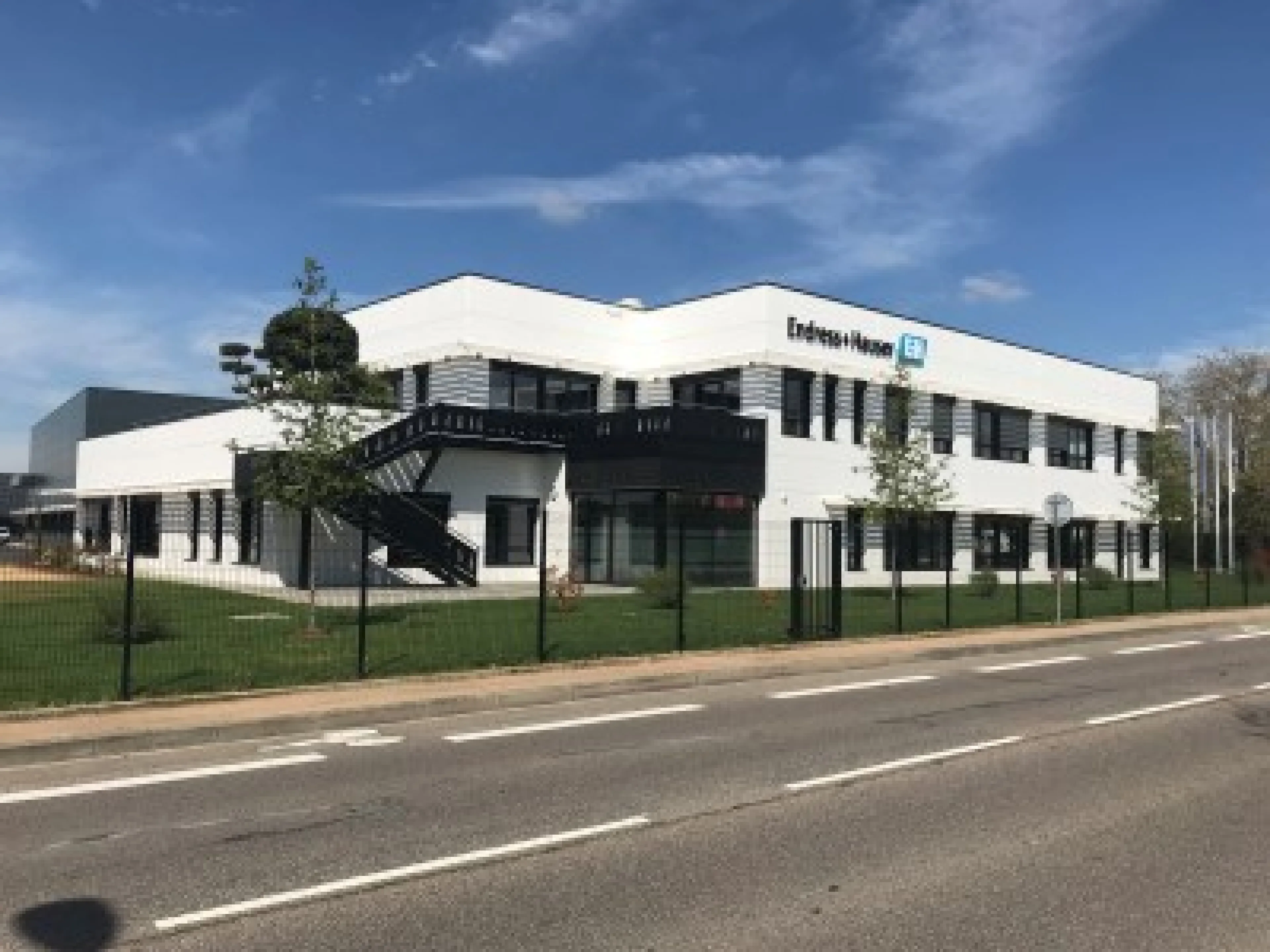

Together with Covestro, BASF, and Yokogawa, Endress+Hauser conducted another large-scale scalability test for Ethernet-APL. The goal was to extend validation to more complex, multi-vendor process automation environments. The test took place in May 2026 at Endress+Hauser Digital Solutions in Reinach, Switzerland. For the first time, the focus was not on the number of connected field devices, but rather on the scalability of different plant architectures. To this end, a “CENTUM VP” control system from Yokogawa was integrated with the “Plant Resource Manager” (PRM) asset management system into a large-scale test environment based on Profinet via Ethernet-APL.
Ethernet-APL validates complex network architectures
Building on earlier vendor-agnostic tests, the scope of the validation was significantly expanded. In addition to testing under peak load conditions, a long-term test lasting several days was conducted for the first time to evaluate the network’s behavior under realistic operating conditions. The test environment included multi-ring Ethernet-APL topologies, various infrastructure components, and the integration of control systems, field devices, and switches from different manufacturers. In addition, asset management access across multiple network segments was validated using a private VLAN architecture. “The successful results of this fifth large-scale test give users confidence in the maturity, scalability and flexibility which Ethernet-APL offers in real-world, multi-vendor architectures,” explains Karl Büttner, Advanced Expert Product Management at Endress+Hauser.
Yokogawa expands Ethernet-APL ecosystem
For the first time, Yokogawa’s “CENTUM VP” control system was successfully integrated into the test environment. This expands the number of validated DCS platforms for Ethernet-APL. At the same time, the integration of additional Ethernet-APL switches and network infrastructure components confirms interoperability within the growing Ethernet-APL ecosystem.
Ethernet-APL delivers strong performance under realistic operating conditions
The tests were conducted under the direction of Covestro. BASF contributed its experience from earlier scalability tests. “Ethernet-APL is a key element on our digital transformation journey. It extends high-speed communication into the field, unlocking the data transparency and connectivity needed to fully digitalize our operations. Taking an active role in this scalability test allowed us to validate the technology under conditions that closely reflect the complexity of our real production environments. The results give us greater confidence in the technology's readiness for deployment in large-scale industrial environments,” says Sebastian Mahler, Vice President and Head of Process Control Technology at Covestro.
BASF also views the results as another milestone. “With the successful completion of the latest tests, we can now confirm that Yokogawa also demonstrated scalability in 2026 as part of a test led by Covestro and conducted at Endress+Hauser in Reinach, Switzerland,” adds Gerd Niedermayer, Senior E&I Engineering Manager at BASF.
Cross-manufacturer interoperability demonstrated in a field test
For the test, components from various manufacturers were combined and validated. These included the Yokogawa “CENTUM VP” control system with “Plant Resource Manager,” APL field devices from Endress+Hauser, APL positioners from Samson, and Ethernet-APL switches from R. Stahl, Softing, Phoenix Contact, and Pepperl+Fuchs. The network infrastructure also included a Hirschmann switch with a private VLAN structure for asset management access, as well as Siemens “Scalance” switches acting as Media Redundancy Protocol (MRP) managers. According to Endress+Hauser, the successful validation under real-world conditions underscores the readiness of Ethernet-APL for complex, cross-vendor applications in the process industry.