
Interpack 2026 addresses key challenges facing the confectionery and bakery industry and presents technological solutions for adapting production and packaging. Rising costs, new regulatory requirements, and changing market structures are increasing the pressure to act. At the same time, efficiency, flexibility, and sustainable production concepts are becoming a greater focus of industrial investment decisions.
Wide range of solutions at Interpack
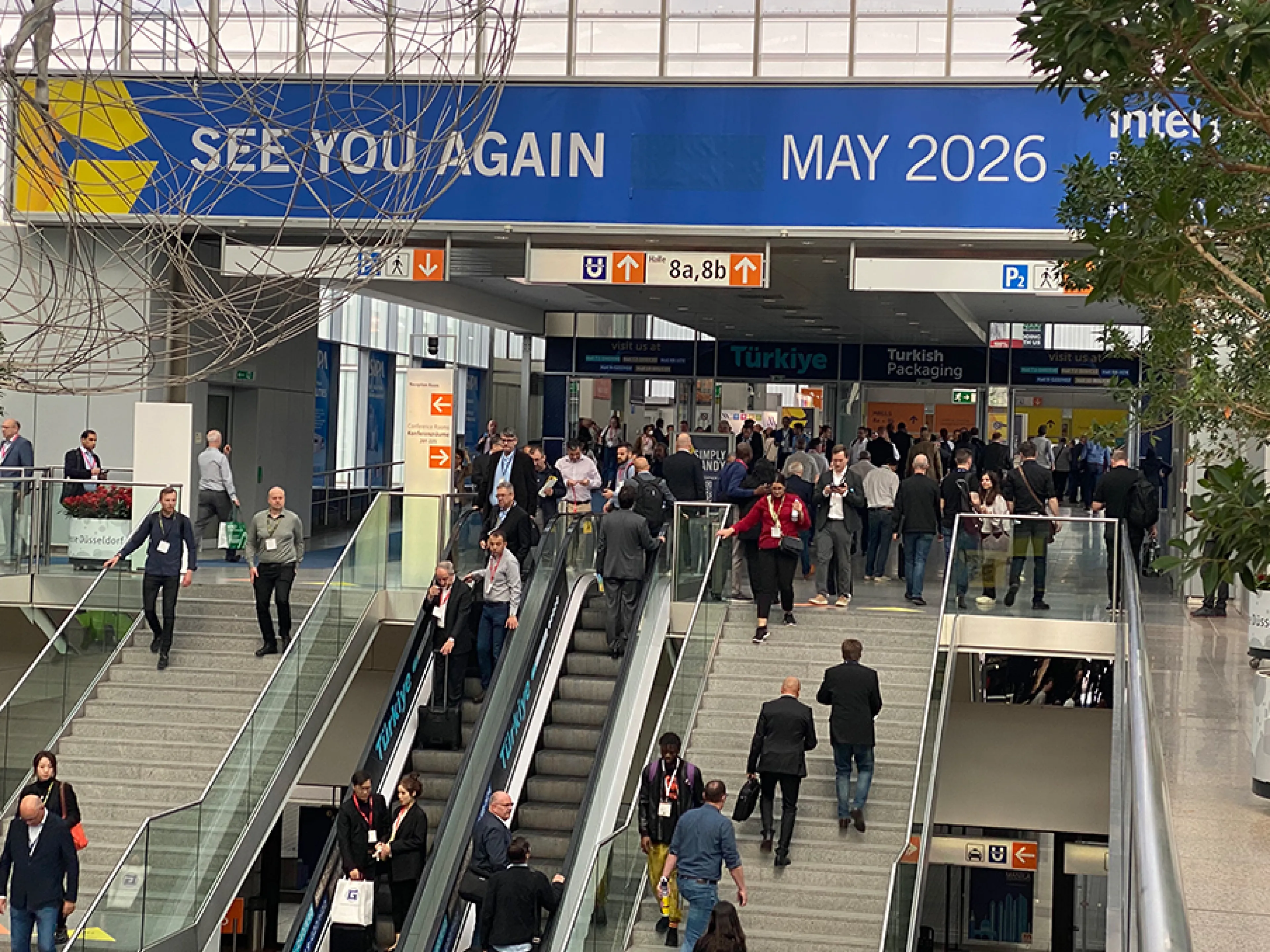
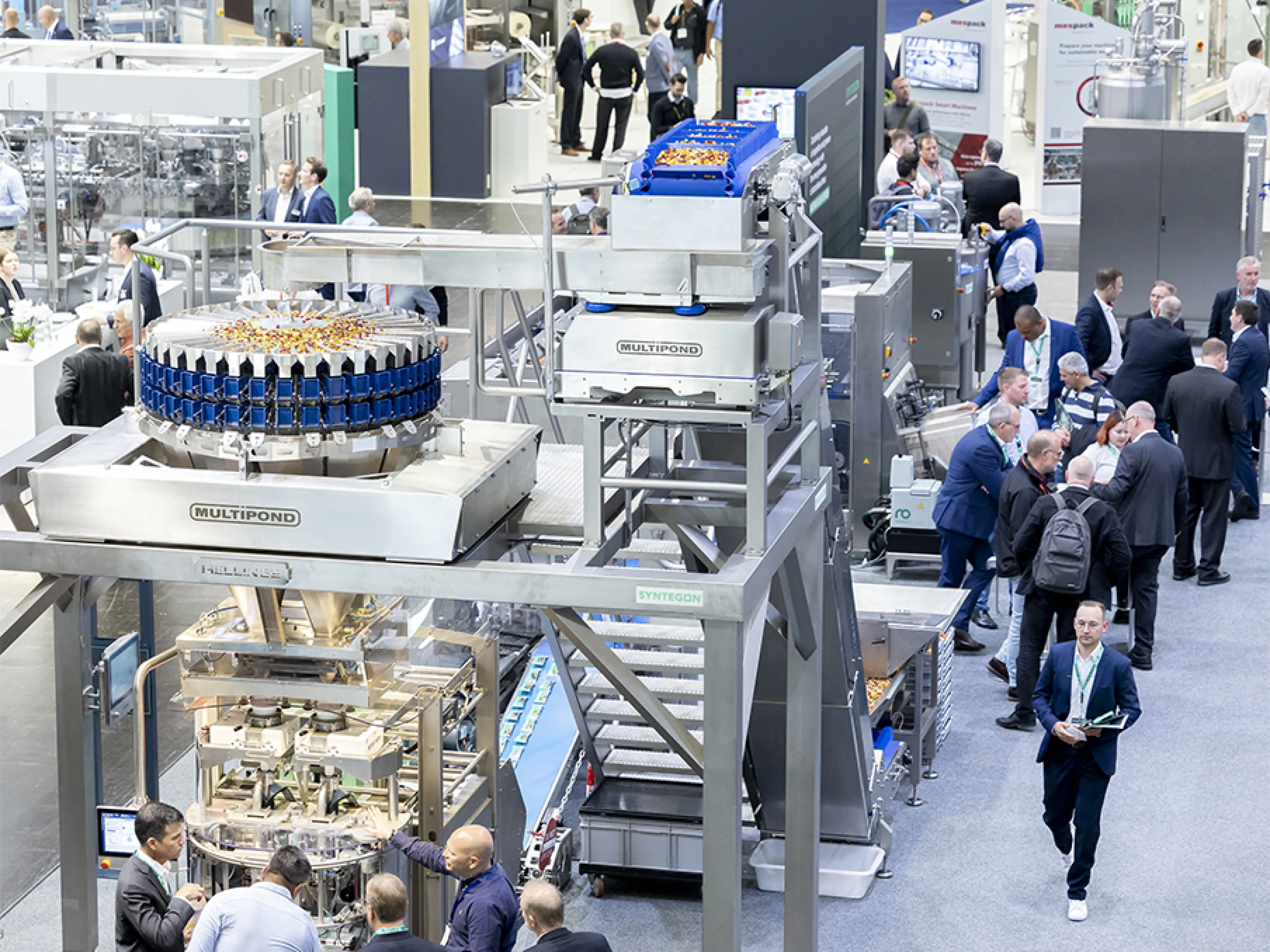
At Interpack 2026, the offerings for the confectionery and bakery industry will be concentrated in Halls 1, 3, and 4 at the South Entrance of the Düsseldorf exhibition grounds. There, across 40,000 square meters, process steps ranging from raw material processing through shaping and finishing to packaging will be showcased. Exhibitors include Aasted, Sollich, Theegarten-Pactec, Sacmi Packaging & Chocolate, Bühler, and Coperion. In addition, the trade show will showcase a wide range of packaging materials and supplies in other halls. A total of more than 2,800 exhibitors are expected.
Market dynamics are changing production requirements
Economic conditions remain stable, while growth drivers are shifting. The global baked goods market stood at 177 million tons in 2024 and is projected to grow by 9.6 percent by 2029. For the confectionery market, growth of 4.5 percent is forecast over the same period. Growth momentum is coming primarily from regions such as the Middle East, Africa, and parts of Latin America. At the same time, cost structures and regulatory requirements are changing, necessitating adjustments in production and supply chains.
Industry voices reflect the pressure to transform
Exhibitors describe a multitude of factors acting simultaneously. “The greatest pressure for transformation stems from the combined impact of raw material crises, sustainability requirements, health regulations and rising costs. The key levers for companies therefore lie in three areas: resilient and sustainable raw material and supply chains, recipe and product innovation (particularly sugar reduction and alternative ingredients), and increased efficiency and flexible production,” explains Thomas Bischof, Global Head of Business Development Consumer Foods at Bühler.
Economic conditions also influence investments: “The confectionery industry, and the chocolate industry in particular, is currently under massive cost pressure, primarily due to sharply rising raw material prices. This is increasing the demand for highly efficient and durable production facilities. At the same time, rising energy costs are forcing investment in modern technologies that significantly reduce energy consumption,” says Klaus-Dietrich Franzmeier, Director of Sales & Marketing at Sollich.
Strategic investments take center stage at Interpack
Within the industry, the focus is increasingly shifting toward concrete investment decisions. Matt Craig, Coperion Food, Health & Nutrition Division, adds: “Make investment decisions in line with the areas in which the industry is actually investing: modernisation and upgrades rather than solely the construction of entirely new production sites. Bakeries are prioritising packaging, software/IT/AI, robotics and automation, as well as key process steps such as mixing and material handling – because these investments deliver measurable improvements in quality, efficiency and plant availability.”
Interpack demonstrates concrete implementation approaches
Interpack 2026 serves as a platform where companies present concrete solutions for these requirements. Bühler showcases applications for product development and process optimization, including in the “Minimarket” and the “Food Sensation Lab.” Sollich is presenting further developments in coating technology and is collaborating with Sweetconnect on machine learning approaches for process optimization. Coperion focuses on integrated systems that link equipment, control, and automation. These include mixing technologies, application systems, and solutions for depositing and extrusion, which are designed for stable process control and flexible adaptation.