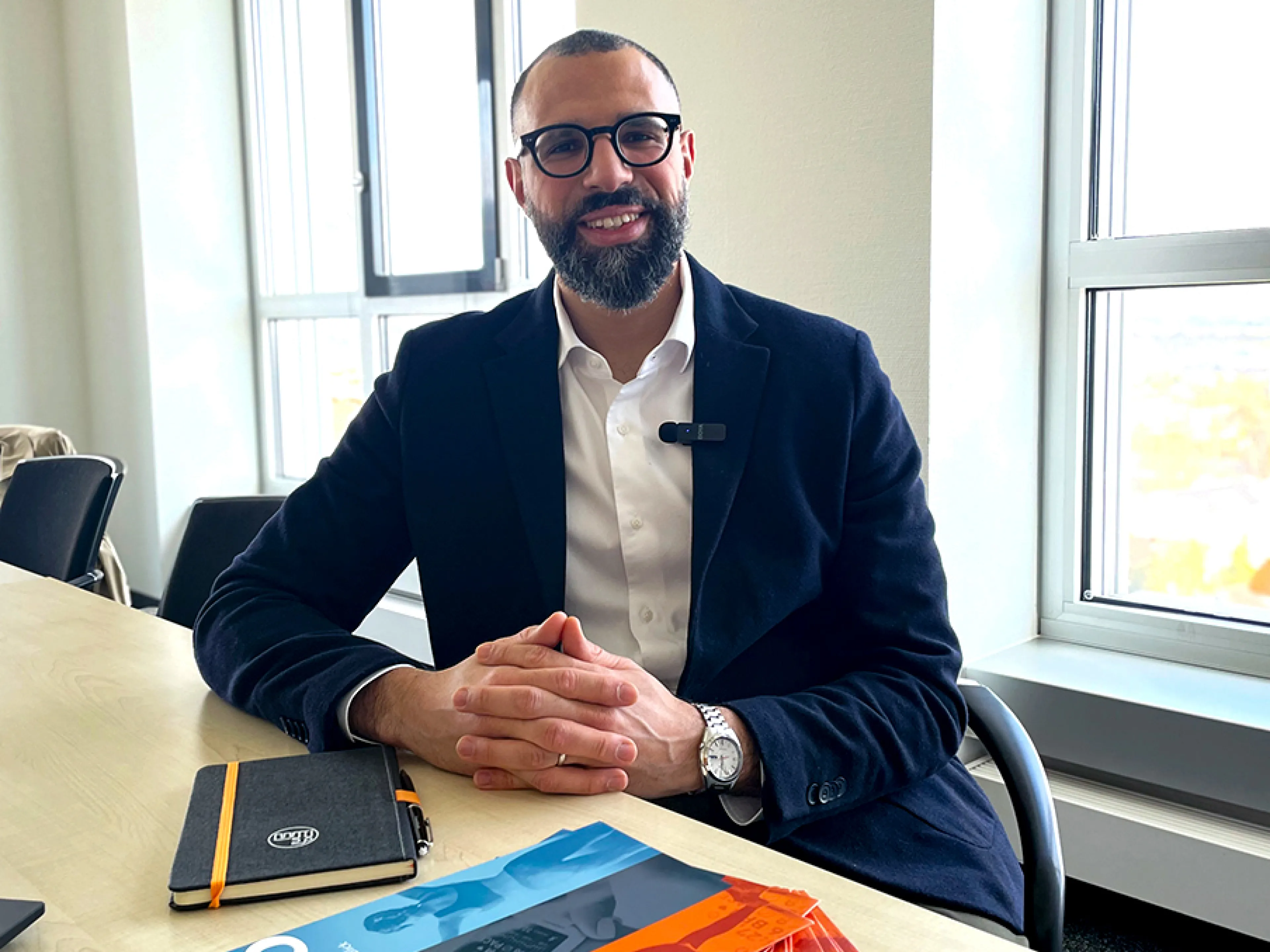

Once a new packaging machine is commissioned, the real test often begins in day-to-day production. Operators must get used to new processes, products and materials do not always behave as specified in the technical specifications, and in shift operations, routines creep in over time that harm line performance. In an interview, Tobias Brütsch, Director of Services Food Horizontal at Syntegon, explains how machine availability and performance can be ensured in the long term, why service today is much more than just a supply of replacement parts, and what role digital tools play in this.
Mr. Brütsch, horizontal form-fill-seal machines are used in the food industry for products such as bars, cookies, and snacks. What challenges typically arise in day-to-day production?
Immediately after commissioning, attention levels in the plant are usually very high. Procedures have just been trained, and everyone is paying close attention. In day-to-day operations, however, this changes quickly. Operators are not yet experienced, shifts change, experienced employees leave, and over time, old habits creep back in. Then adjustments are made to parameters, even though the actual cause often lies elsewhere entirely.
On top of that, modern packaging machines are significantly more complex than earlier generations. They are more automated, rely more heavily on software, and require a deeper understanding of the process. At the same time, many plants lack personnel with precisely this expertise. Added to this are hygiene requirements, product changes, initial signs of wear, or altered production conditions. All of this rarely manifests itself abruptly, but usually as a gradual decline in performance.
Why does machine performance often decline again after the ramp-up phase?
Because many small changes accumulate during ongoing operation. If there is a massive drop, say, from 90 to 70 percent efficiency, the operator takes immediate action. More difficult are the cases where performance declines slowly. Then the system runs at 89 percent today, 88 percent tomorrow, and 87 percent the day after tomorrow. This isn’t immediately noticeable because the current level quickly becomes the new baseline.
This is exactly what we often see in practice. Operators get used to deviations, materials behave differently, processes on the customer’s side change, and the line is run, bit by bit, differently than originally intended. If this isn’t systematically monitored, performance is noticeably lost over time without it being immediately perceived as a problem in day-to-day operations.
How can service counteract this creeping loss of performance?
First, the causes must be clearly identified. Today, service cannot wait until the machine has already come to a standstill. The goal is to identify deviations early on and take structured countermeasures through inspections, condition assessments, preventive measures, and close communication with the customer.
Our goal is always to restore the machine to its originally agreed-upon performance level. That is why we look not only at mechanical wear but also at operating practices, material fluctuations, or changes in process conditions. This is precisely why service agreements rely on predictable measures, clear responsibilities, and regular assessments of the machine’s condition rather than purely reactive “firefighting” interventions.
What are the most common causes of downtime or performance losses during ongoing operations?
Classic causes include mechanical wear on blades or drives, as well as problems with sensors, electronics, or control systems. Missing or delayed replacement parts also play a role. In practice, however, multiple factors often converge.
In the food industry in particular, products and materials are highly sensitive to their environment. Cardboard can behave differently when humidity levels change, chocolate reacts to fluctuations in temperature and humidity, and sensitive or gluten-free products have their own specific handling requirements. Added to this are improper changeovers, operator errors, or inadequate cleaning. Taken together, this leads to more scrap, more stoppages, and declining line output.
You mention the production environment. How significant is the actual impact of such factors?
More significant than people often realize. A good example is cardboard used in secondary packaging. If it’s stored in a cool, dry environment and then moves into a warm, more humid production area, it changes. It can warp and then can no longer be processed as easily as when it was in ideal condition. A similar phenomenon occurs with chocolate or delicate baked goods, just in a different form.
For the production line, this means more disruptions, more scrap, and more cleaning effort. Such factors are highly relevant to performance. That’s why it’s not enough to focus solely on the machine itself. You must always consider the product, the materials, and the environment as well.
What impact does a structured service approach have on availability, production reliability, and planning?
Above all, it brings stability and predictability to the system. Maintenance windows can be planned more effectively, responsibilities are clearer, and unplanned interventions decrease. This increases availability and makes production more predictable.
Ultimately, this is also an economic issue. What matters to the customer is the cost of turning an unpackaged product into a marketable one. Every instance of downtime avoided, every reduction in scrap, and every well-planned maintenance task has a direct impact on this economic efficiency. Structured service therefore not only improves machine availability but also enhances planning reliability and production reliability.
In the mechanical engineering industry, service was long associated primarily with replacement parts. How has this role changed?
In the past, service was largely reactive. A problem arose, a part was replaced, and that essentially resolved the issue. Today, the scope is much broader. Machines are more complex, data-rich, and software-intensive. Many operators no longer have the internal capacity to handle all these issues on their own.
Service has therefore become much more of a lifecycle issue. Today, this includes training, condition assessment, preventive maintenance, performance improvement, obsolescence management, and data-driven analysis. The service partner should not only help when something breaks, but also contribute to ensuring that the system runs reliably and economically for years to come.
Does that also mean that service has become more of a consulting service?
Yes, definitely. Many customers now clearly see the benefits. The challenge often lies less in understanding this than in embedding it in the budgeting process. When investing in a new machine, customers usually plan its performance very precisely at the time of acceptance. However, they often don’t give enough thought to what comes afterward.
Yet it is precisely during ongoing operation that the true economic efficiency of a system is ultimately determined. That’s why service needs to be incorporated into planning earlier today. It’s not just about a technician’s visit, but about how a customer can operate their line stably and efficiently over the years.
Do service platforms replace on-site experience?
Service remains a people business. When a problem arises, customers want to speak with someone who understands the application and can assess the situation. Data is enormously helpful, but it cannot replace on-site experience or direct communication. It creates a significantly better foundation for decision-making and highlights trends that would otherwise go unnoticed for a long time.
What advice would you give to a food manufacturer who has just invested in a new form-fill-seal machine?
Service shouldn’t become an issue only after commissioning. Anyone purchasing a new line should consider training, preventive maintenance, condition checks, a spare parts strategy, and clear KPIs from the very beginning. It’s not just crucial that the machine meets the target values during acceptance testing, but that it also maintains this performance consistently in day-to-day operations.
My advice would therefore be to involve the machine manufacturer early on and throughout the entire lifecycle. Modern production lines are too complex to be operated solely on a reactive basis. Anyone who wants to maintain a long-term balance between performance, quality, and costs needs a service approach that looks ahead, recognizes patterns, and systematically implements improvements.