
Ultrasonic sealing has become an important technology in modern packaging production. As packaging manufacturers increasingly process sustainable and material-sensitive films, conventional heat sealing systems are reaching technical limits in many applications. Against this backdrop, Herrmann Ultraschall and Gerhard Schubert have continuously expanded their collaboration over the past years to develop ultrasonic sealing solutions for flowpack production. What initially began with thermoforming applications has evolved into a long-term technology partnership focused on flexible packaging systems, sustainable films and highly stable sealing processes.
Ultrasonic sealing enables stable sealing quality in flowpack production
Ultrasonic sealing uses high-frequency mechanical vibrations to generate frictional heat directly within the sealing area of the packaging material. In contrast to conventional heat sealing, the tools themselves remain comparatively cool during the process. This technology offers several advantages for flowpack applications. The process enables narrow and precise seal seams while reducing thermal stress on films and packaged products. In addition, ultrasonic sealing can significantly reduce energy consumption compared to traditional heat-sealing systems. According to Herrmann Ultraschall, the process can lower energy demand by up to 75 percent.
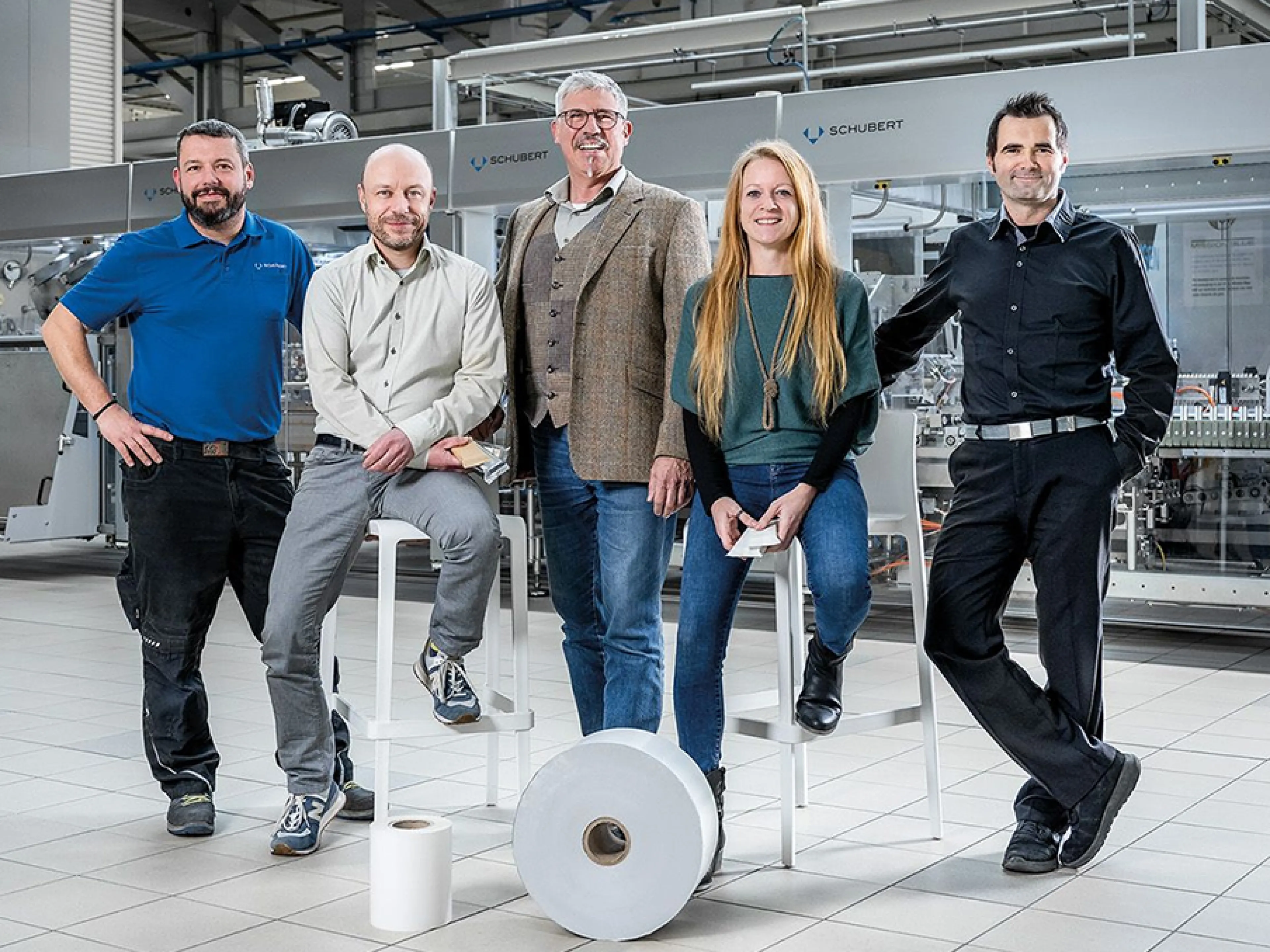
The collaboration between Herrmann Ultraschall and Schubert dates back to the early 2000s. Initially, Schubert was searching for an efficient sealing technology for blister packaging applications. The project later developed into a broader cooperation around flowpack production systems. A key requirement for Schubert was achieving consistently stable seal quality at varying film speeds, particularly in highly dynamic packaging environments using pick-and-place robotics. “We were looking for a way to ensure consistently high-quality seal seams regardless of the film speed,” points out Stefan Horvath, Product Manager at Gerhard Schubert.
Conventional heat-sealing systems can create fluctuating sealing results under such conditions. Excessive heat exposure may damage films, while insufficient contact time can reduce seal integrity. Ultrasonic sealing addresses these challenges by generating frictional heat directly at the sealing interface and by reducing dependence on dwell time and temperature stability.
Ultrasonic sealing supports sustainable packaging materials
Another important driver for the collaboration has been the growing use of recyclable mono-material films and paper-based packaging structures. These materials often require gentler sealing technologies than conventional thermal processes. According to both companies, ultrasonic sealing enables more stable processing of sustainable packaging films while maintaining sealing integrity. “Ultrasonic sealing essentially makes the processing of sustainable films more practical, so we were once again happy to take on this new challenge with Schubert,” says Michael Zimbleraikis, Regional Sales Director Packaging at Herrmann Ultraschall.
Schubert therefore integrated Herrmann Ultraschall’s longitudinal sealing modules into its “Flowmodul” system for horizontal flowpack production. The compact design of the ultrasonic units simplified integration into the existing machine architecture. Today, around 100 ultrasonic longitudinal sealing modules are reportedly in operation worldwide within Schubert flow-wrapping systems.
Box Motion technology expands applications
The cooperation later expanded beyond longitudinal sealing applications toward ultrasonic cross-sealing systems. For this purpose, both companies jointly developed an ultrasonic Box Motion cross-sealing unit. In Box Motion systems, sealing jaws move synchronously with the packaging film to create stable and continuous seal seams during operation. The integration of ultrasonic sealing technology into this process enables reliable sealing performance for sensitive and recyclable films while maintaining packaging speed and process stability.
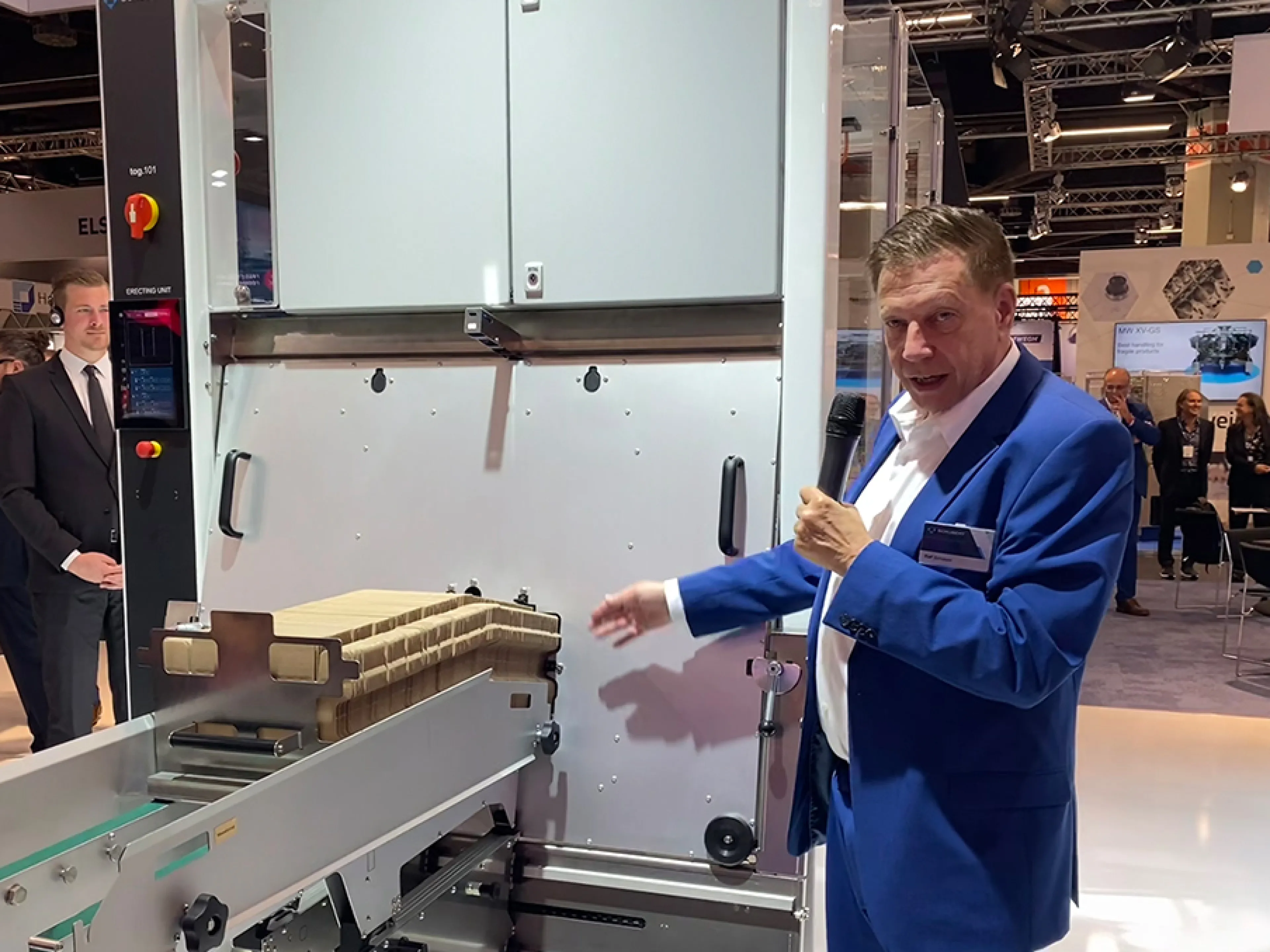
According to Schubert, the project required extensive material testing and engineering collaboration between both companies. At Interpack 2023, Schubert presented the jointly developed ultrasonic Box Motion cross-sealing unit integrated into a “TLM Flowpacker”. The system allowed ultrasonic sealing and conventional heat sealing technologies to be exchanged on the same machine platform.
Importance of ultrasonic sealing in flexible packaging production
The growing demand for recyclable packaging materials, energy-efficient production processes and highly automated packaging lines is increasing the relevance of ultrasonic sealing technologies across the packaging industry. For machine manufacturers and packaging producers, ultrasonic sealing offers advantages in terms of process reliability, energy efficiency and material compatibility. The collaboration between Herrmann Ultraschall and Schubert demonstrates how ultrasonic sealing is evolving from a specialised joining technology into a central process component for next-generation flexible packaging systems.