
Rising raw material prices, unstable markets, and new regulatory requirements are posing challenges for the food and confectionery industry. At the same time, issues such as hygienic production, sustainable packaging, and automation are driving the industry forward. Sacmi Packaging & Chocolate is positioning itself in this dynamic environment with a clear strategy that ranges from targeted acquisitions to new technologies for processing and packaging. In an exclusive interview, Herbert Hahnenkamp, General Manager for Germany, Austria, and Switzerland, provides insights into market trends and the company’s strategy. He reveals which innovations will make their debut at Interpack 2026 and describes his unique approach to leadership.
1. Sacmi is organized as a cooperative and operates in a volatile market environment. How does this influence your strategic direction?
Sacmi’s cooperative structure ensures a long-term and stable strategic direction. Decisions are not adjusted on a short-term basis but are guided by sustainable goals and clearly defined corporate values. The focus is on continuous research and development as well as close collaboration with customers.
This approach proves particularly advantageous in a challenging market environment characterized by fluctuating raw material prices, geopolitical uncertainties, and changing consumer behavior. Demand in the confectionery industry is heavily dependent on consumption, which makes planning difficult. This makes a strategy that offers stability and does not react to short-term fluctuations all the more important.
2. Sacmi has recently been making targeted acquisitions. What role do these acquisitions play in your strategy?
Following the sale of the Beverage division, the Packaging division was identified as a key growth area and has been systematically expanded. Acquisitions are guided by clear strategic criteria. On the one hand, the focus is on globally scalable products; on the other, on strengthening our regional presence in key markets. One example is the acquisition of a French company with an established sales and service organization. This enabled Sacmi to expand its market presence in a targeted manner while simultaneously broadening its portfolio in the secondary packaging sector, particularly in the mid-range performance segment, which had previously been less well covered. In doing so, Sacmi is also responding to the food industry’s growing demands for regional availability, fast service, and high equipment uptime. Especially when competing with lower-cost providers, an efficient customer service is a decisive differentiating factor.
3. The PPWR imposes new requirements on packaging solutions. How exactly is Sacmi addressing these?
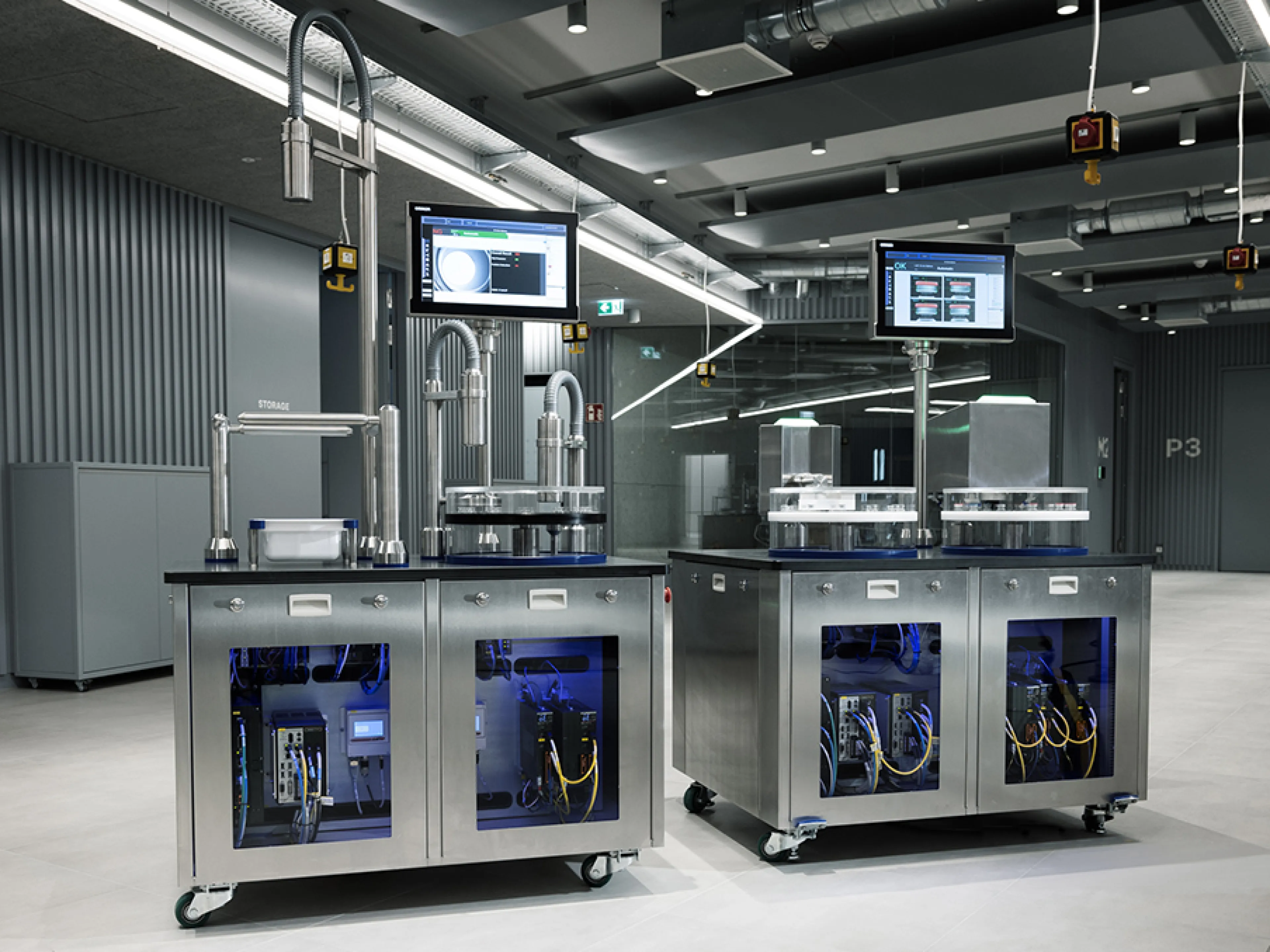
The increasing regulation under the PPWR is significantly driving the development of sustainable packaging solutions. Sacmi focuses on flexibility and close collaboration with customers and material manufacturers. A key component is our in-house laboratory facility at the development center, where tests with various materials are conducted regularly. These tests address issues such as sealing technology, barrier properties, and processability under real production conditions. At the same time, packaging solutions must not only be sustainable but also meet the requirements of food processing, for example regarding product protection, shelf life, and process reliability.
Technical challenges remain, particularly with fiber-based materials. For example, water-based dispersion barriers must not be damaged during the forming process. We have already developed solutions for this, such as tools that are gentle on the material and adapted processes. Another focus is on the further development of heat-sealing processes. The long-term goal is to eliminate the need for additional coatings while still achieving high production speeds. There is still a need for development in this area.
At the same time, the requirements of brand manufacturers are also changing. In addition to sustainability, appearance, feel, and user-friendliness play a central role. Packaging must be functional and, at the same time, stand out at the point of sale.

4. What role does Interpack play for Sacmi, and what topics will be the focus in 2026?
Despite rising costs, Interpack remains one of the most important platforms for Sacmi in the international marketplace. It stands out above all for its visitor profile. The proportion of decision-makers is high. The focus here is less on closing specific deals and more on building trust, fostering long-term partnerships, and positioning the company as a technology supplier. At the same time, many companies are increasingly questioning the effort involved, as innovations now reach the market independently of trade show cycles.
For Sacmi Packaging & Chocolate, however, Interpack 2026 is still a key event. Following the strategic realignment and the sale of the rigid packaging division, the focus is shifting more strongly toward packaging and, in particular, chocolate, which is reflected in a significantly larger exhibition booth.
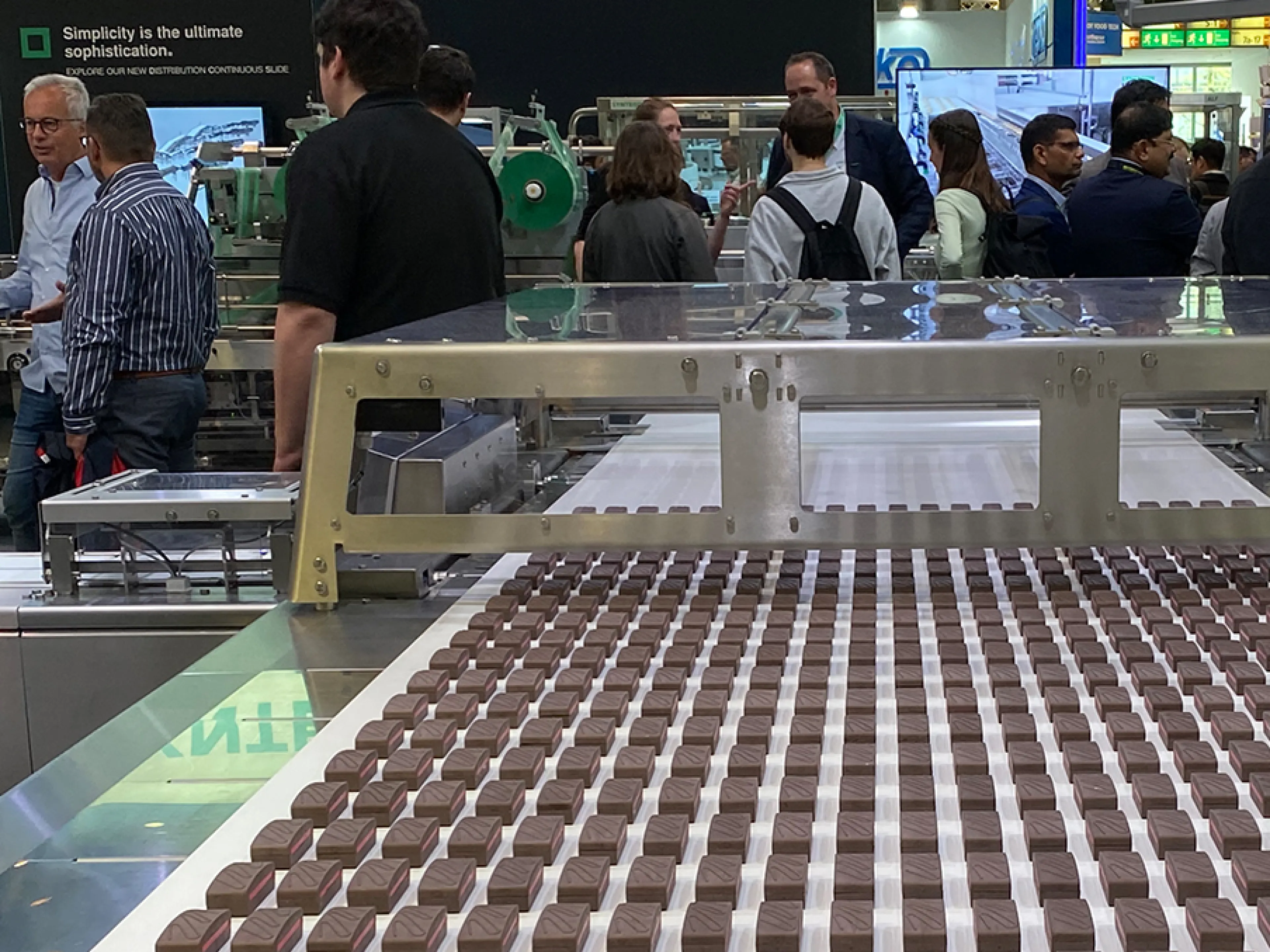
In terms of content, we aim to showcase technological advancements across the entire value chain. In the field of chocolate processing, a new solution for producing chocolate mass will be presented. When it comes to moulding chocolate bars or pralines, one topic takes center stage: hygiene. Requirements for cleaning processes have risen significantly in recent years, not least due to the increasing variety of products in food production and the handling of allergens. While conventional systems often require long cleaning times, Sacmi has ensured that these processes are designed to be significantly more efficient, reducing downtime and increasing flexibility during frequent product changes in confectionery production.
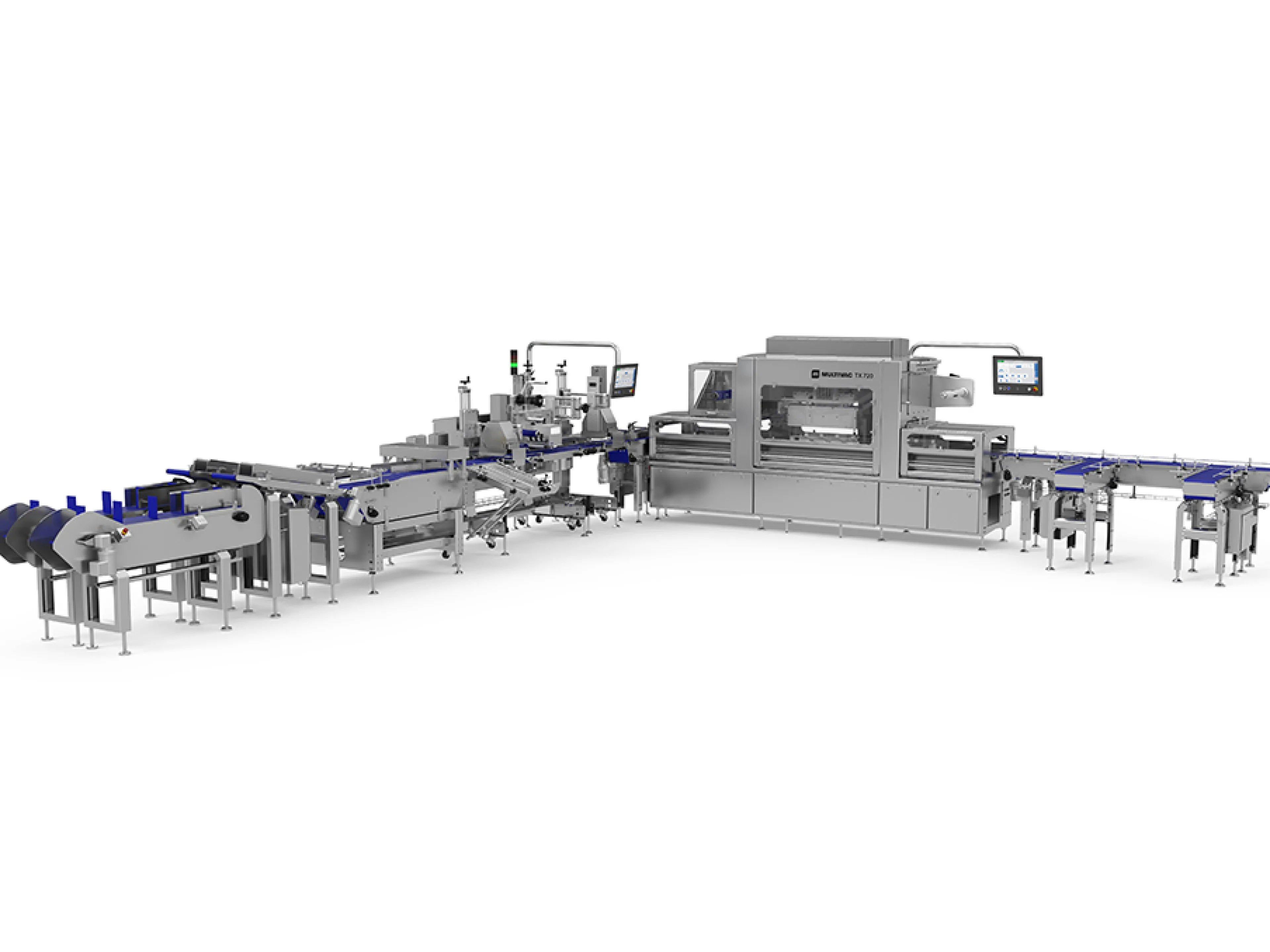
Priorities are also shifting in the packaging sector. In primary and secondary packaging, the focus is increasingly on automation and efficiency gains to reduce production costs. Cobots, for example, are being used here. At the same time, the topic of sustainable packaging is coming into sharper focus. Fiber-based materials, in particular, are gaining importance, especially in light of regulatory requirements such as the PPWR. In this context, Sacmi sees itself as an integrator that incorporates new materials into existing processes and further develops them in collaboration with customers.

5. Dessert: You are regarded as a leader who fosters strong employee loyalty. What distinguishes your leadership style?
The leadership style at Sacmi is strongly shaped by the values of our cooperative enterprise. At its core are loyalty, integrity, trust, and collaboration. We aim to create a work environment where employees can thrive and identify with the company over the long term. To achieve this, it is crucial to delegate responsibility while fostering a culture of respect. Successfully establishing these conditions leads to high motivation and commitment, which serve as essential foundations for sustainable business success.
Mr. Hahnenkamp, thank you for the interesting conversation and the preview of Sacmi’s trade show premieres at Interpack 2026!
Editor’s note: You can find Sacmi at Interpack in Düsseldorf in Hall 4, Booth E05/F05.